
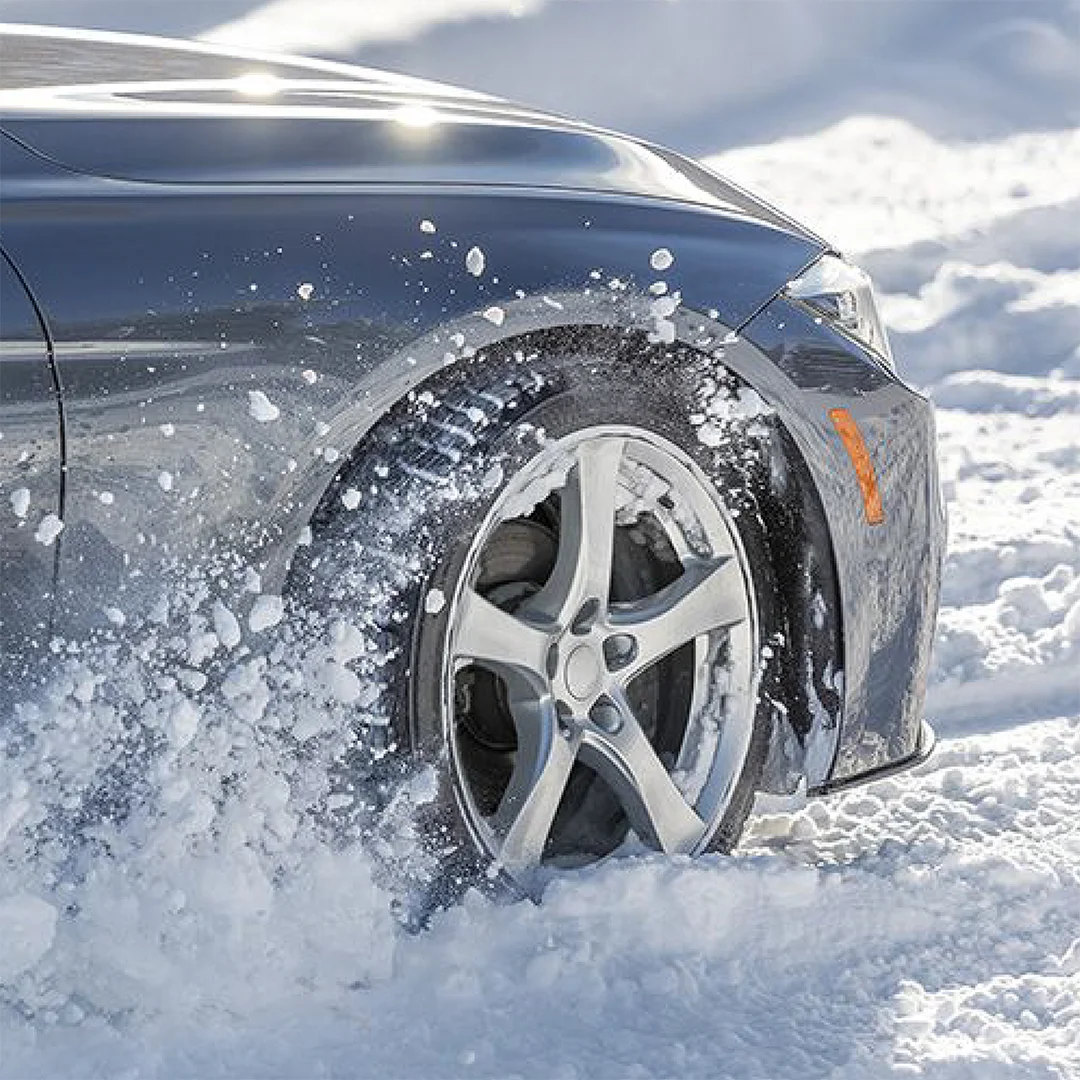
In many parts of the country, winter conditions push vehicles far beyond what all-season tires were designed to handle. All-season tires are exactly that—a compromise. They balance ride comfort, handling, and year-round usability, and they perform reasonably well in rain and light winter weather. Once snow starts piling up or temperatures stay below freezing, however, that compromise can quickly become a liability.
That’s when winter tires enter the conversation.
Modern winter tires are a long way from the loud, heavy “snow tires” many drivers remember from decades past. Today’s designs focus on predictable handling, reduced road noise, and responsive steering while still delivering the traction needed for snow, slush, and cold pavement.
How Winter Tires Are Different
Winter tires rely on two key design advantages: tread pattern and rubber compound.
Their tread features deeper grooves and aggressive siping designed to channel snow and slush away from the contact patch. This allows the tire to maintain consistent grip with each rotation instead of packing snow into the tread.
More importantly, winter tires use a specialized rubber compound that stays flexible in cold temperatures. While all-season and touring tires stiffen as temperatures drop, winter tires remain pliable—even at or below zero—allowing them to grip cold pavement more effectively.
Some winter tires are also designed to accept studs, which can further improve traction in snow and light ice conditions where allowed.
Tradeoffs to Consider
Winter tires offer clear advantages in cold weather, but they aren’t without compromises.
Winter tires typically don’t handle as precisely on dry pavement due to their softer construction. This difference is most noticeable when roads are clear and dry.
They also tend to generate more road noise than all-season tires.
Because the rubber compound is softer, winter tires wear much faster in warm temperatures. For that reason, winter tires should not be used once temperatures consistently rise above roughly 35–45 degrees. Proper seasonal changeover and professional tire installation and balancing help maximize tire life and performance.
It’s also important to install winter tires as a full set of four. Mixing winter and all-season tires can lead to unpredictable handling, uneven traction, and poor vehicle stability.
When Winter Tires Make Sense
The decision ultimately comes down to climate and driving conditions.
If winter weather in your area consists of occasional snow that melts quickly and temperatures frequently climb above freezing, all-season tires may be sufficient.
If you regularly drive in regions where snow is measured in feet rather than inches, roads remain icy for long stretches, or temperatures stay below freezing for weeks at a time, winter tires can provide meaningful improvements in traction, braking, and overall control.
Drivers in colder regions often find that winter tires reduce stress and improve confidence behind the wheel, particularly during early morning commutes or rural driving where roads are slower to clear. Pairing winter tires with proper wheel alignment can further improve stability and predictable handling on snow-covered roads.
A Practical Way to Decide
Choosing winter tires isn’t about fear—it’s about matching your equipment to your environment. Understanding how winter tires work, where they excel, and where they fall short allows you to make a decision based on conditions rather than assumptions.
The right tire setup can make winter driving more predictable and controlled, which matters long before you ever reach the limits of traction.
Winter Tire FAQs
Are winter tires better than all-season tires?
Winter tires are better in cold temperatures, snow, and icy conditions because their rubber compound stays flexible and their tread is designed for traction. All-season tires are a compromise designed for moderate, year-round use.
Do I need winter tires if I have all-wheel drive?
All-wheel drive helps with acceleration, but it does not improve braking or cornering on snow and ice. Winter tires improve traction for all vehicles, regardless of drivetrain.
When should I switch to winter tires?
Most experts recommend installing winter tires when temperatures consistently fall below 45 degrees. Cold temperatures alone reduce all-season tire performance, even on dry roads.
Can I use winter tires year-round?
No. Winter tires wear quickly in warm temperatures and do not handle as well on dry pavement. They should be removed once temperatures rise consistently above 35–45 degrees.